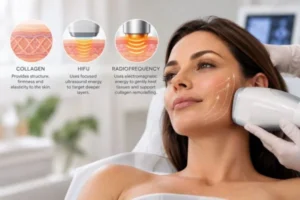
How Non-Surgical Skin Tightening Works: Collagen, HIFU & Radiofrequency
Skin naturally changes as we age. Over time, it may become less firm, lose elasticity, or develop fine lines and wrinkles. Several factors influence these changes, including collagen production, genetics, sun exposure, lifestyle, and the natural ageing process.
For people interested in improving skin firmness without surgery, non-surgical treatments such as High-Intensity Focused Ultrasound (HIFU) and radiofrequency (RF) may be options worth exploring.
Both technologies use controlled energy to heat targeted tissues, but they work differently and at different depths.
At Lipo 360, we take a consultation-led approach to non-surgical aesthetic treatments, helping clients understand the available options, their limitations, and whether a particular treatment may suit them.
In this guide, we explore the science behind skin firmness, the role of collagen and how HIFU and radiofrequency treatments are used in aesthetic practice.
Understanding Skin Ageing and Collagen
Collagen is one of the skin’s main structural proteins. It helps provide strength and support, working alongside elastin and other components to maintain the skin’s structure and flexibility.
The skin consists of several layers, including:
- Epidermis: The outer protective layer of the skin.
- Dermis: The deeper layer containing collagen, elastin, blood vessels and other supporting structures.
- Subcutaneous tissue: The layer beneath the skin, containing fat and connective tissue.
As we age, changes in collagen production and organisation, elastin, and other skin structures can reduce firmness and elasticity.
Other influences include repeated sun exposure, smoking, hormonal changes, genetics and environmental factors.
These changes are a normal part of ageing and do not necessarily require treatment.
However, some individuals choose non-surgical aesthetic procedures to address specific cosmetic concerns.
What Is Non-Surgical Skin Tightening?
Non-surgical skin tightening is a general term for aesthetic procedures that improve skin firmness without surgical incisions or removal of excess skin.
Different technologies are used, including ultrasound-based and radiofrequency-based devices.
Many of these treatments aim to deliver controlled heat to selected tissues, potentially triggering biological processes associated with collagen remodelling.
However, the extent of any visible improvement varies considerably between individuals.
Results may depend on factors such as skin condition, age, treatment area, device settings and individual biological responses.
Non-surgical skin tightening is not equivalent to a surgical facelift or other procedures designed to remove significant excess skin.
How Does HIFU Skin Tightening Work?
High-Intensity Focused Ultrasound, commonly known as HIFU, uses focused ultrasound energy to deliver heat to specific depths beneath the skin’s surface.
Unlike treatments that primarily affect superficial layers, some HIFU devices target deeper tissues.
The HIFU process
- Focused ultrasound energy: A treatment device delivers ultrasound energy to selected tissue depths.
- Controlled heating: The device concentrates energy into small focal areas, producing localised thermal effects.
- Tissue response: The controlled heating may initiate processes associated with tissue repair and collagen remodelling.
- Gradual changes: Where a response occurs, changes in skin appearance may develop over time rather than immediately.
HIFU is used in aesthetic practice for selected facial and body concerns, although treatment capabilities and evidence vary by device and treatment area.
Which areas may be considered for HIFU?
Depending on the equipment, clinical assessment and suitability, areas may include:
- Jawline and lower face
- Neck
- Brow area
- Certain areas of the body where skin laxity is a cosmetic concern
Not every area is suitable for every device, and treatment should be considered only after an individual assessment.
What results can be expected from HIFU?
Some individuals may see improved skin firmness after treatment, but outcomes are not predictable or guaranteed.
When visible changes occur, they may develop over several weeks or months.
The degree and duration of any improvement vary, and some individuals may experience little or no noticeable change.
How Does Radiofrequency Skin Tightening Work?
Radiofrequency treatments use electromagnetic energy to generate heat within selected tissues.
Unlike HIFU, which concentrates ultrasound energy at specific focal depths, RF devices use electrical energy to heat tissue through resistance.
The depth and distribution of heating depend on the technology, device design and treatment settings.
How RF interacts with the skin
Radiofrequency energy can produce controlled heating within the skin and underlying tissues.
Depending on the temperature reached and the treatment parameters, this heating may influence collagen structures and collagen-remodelling biological processes.
Aesthetic practitioners use RF to address concerns about skin texture and firmness.
However, not all radiofrequency devices work the same way, and evidence supporting outcomes varies by technology.
Types of radiofrequency treatment
Non-invasive radiofrequency
These devices deliver RF energy through an applicator placed against the skin.
They are used in selected aesthetic treatments where controlled tissue heating is intended without puncturing the skin.
Radiofrequency microneedling
RF microneedling combines fine needles with radiofrequency energy delivered into the skin.
It differs from surface-applied RF because the needles penetrate the skin, making it minimally invasive.
RF microneedling may treat selected concerns involving skin texture, scarring, or firmness, depending on the device and individual suitability.
Because it involves skin penetration and thermal energy, it also carries specific risks to discuss before treatment.
HIFU vs Radiofrequency: What’s the Difference?
Although both technologies use energy-based approaches, they differ in how they deliver and distribute energy.
| Technology | Focused ultrasound | Electromagnetic energy |
| Heating method | Concentrated at selected focal depths | Heating through tissue resistance |
| Treatment approach | Targeted ultrasound energy | Device-dependent tissue heating |
| Skin penetration | Generally no needles or incisions | Non-invasive RF or minimally invasive RF microneedling |
| Intended cosmetic concerns | Selected skin laxity concerns | Selected skin firmness and texture concerns |
| Results | Variable and not guaranteed | Variable and not guaranteed |
Neither treatment is automatically better than the other.
The best approach depends on the individual’s concerns, skin characteristics, medical history, device suitability, and expectations.
Can HIFU and Radiofrequency Stimulate Collagen?
Both HIFU and RF treatments involve thermal effects that may influence collagen remodelling.
When tissues are exposed to controlled heat, biological responses may occur involving existing collagen structures and the cells that produce components of the skin’s supporting framework.
However, it is important to distinguish between a proposed biological mechanism and a clinically noticeable cosmetic result.
A technology may influence collagen-related processes, but that does not guarantee visible skin tightening for an individual.
Clinical evidence varies by treatment type, device, treatment protocol, and outcomes measured.
What Are the Potential Benefits of Non-Surgical Skin Tightening?
Depending on the treatment and individual response, possible cosmetic benefits may include:
- Improvements in the appearance of mild skin laxity
- Changes in the appearance of skin firmness
- Improvements in certain aspects of skin texture
- A non-surgical approach for people who do not wish to pursue an operation
These are potential outcomes, not guaranteed benefits.
Some people may not experience a meaningful cosmetic improvement, and treatment may not be appropriate for more significant skin laxity.
Are Non-Surgical Skin Tightening Treatments Painful?
Sensations during treatment vary by technology, treatment area, energy settings, and individual sensitivity.
During HIFU, some people report warmth, tingling or brief discomfort as ultrasound energy is delivered.
During non-invasive RF treatment, people commonly feel warmth.
RF microneedling can involve additional discomfort because needles penetrate the skin.
Practitioners should explain what sensations may occur, how to manage discomfort, and when to stop treatment.
Don’t accept significant pain as a normal sign that a treatment is working.
Are There Risks or Side Effects?
Although these treatments don’t involve conventional surgery, they still carry risks.
Potential HIFU side effects
Possible effects may include:
- Redness or swelling
- Tenderness or discomfort
- Temporary altered sensation
- Bruising
- Burns or tissue injury
- Rare nerve-related complications or unwanted changes in facial fat
Potential radiofrequency side effects
Depending on the device and treatment method, risks may include:
- Redness and swelling
- Temporary tenderness
- Burns or blistering
- Pigmentation changes
- Scarring
- Unwanted changes in underlying tissue
RF microneedling also carries risks associated with needle penetration, including infection.
More serious complications are possible, particularly when devices are used incorrectly, or unsuitable individuals undergo treatment.
A consultation should include a discussion of relevant risks, contraindications, aftercare and the limitations of treatment.
Who Might Be Suitable for Non-Surgical Skin Tightening?
Suitability depends on several factors and should never be assumed based on age or cosmetic concerns alone.
A practitioner may consider:
- The area the individual wishes to address
- The degree of skin laxity
- Skin condition and sensitivity
- Medical history
- Previous cosmetic procedures
- Medications and relevant health conditions
- The presence of implanted devices or metal in relevant areas
- Individual expectations
Certain medical conditions, pregnancy, active skin infections or implanted electronic devices may affect suitability, depending on the technology and manufacturer guidance.
People with significant excess skin may be advised that non-surgical procedures are unlikely to produce the changes achievable through surgery.
If your concerns are medical rather than cosmetic, consult an appropriate healthcare professional.
How Long Do Results Last?
No single timeframe applies to every HIFU or RF treatment.
Any visible improvements may be influenced by:
- The treatment technology
- Individual tissue response
- Ageing and skin condition
- Sun exposure
- Lifestyle factors
- Treatment area and protocol
Natural skin ageing continues after treatment.
Some individuals may choose to discuss further sessions, but repeat treatment should not be presented as automatically necessary or suitable.
There is no guarantee that results will occur or be maintained for a particular period.
Can You Support Skin Health Naturally?
Many factors influence skin health, and aesthetic treatments are only one possible option.
Several everyday measures can help support general skin health.
1. Protect your skin from UV exposure
Use broad-spectrum sunscreen regularly, along with shade and protective clothing, to reduce UV-related skin damage and premature ageing.
2. Eat a balanced diet
A varied diet with enough protein, vitamin C, and other essential nutrients supports normal tissue maintenance and collagen formation.
3. Avoid smoking
Smoking is linked to premature skin ageing and can harm skin structure and healing.
4. Maintain a suitable skincare routine
Gentle cleansing, moisturising and sun protection can help maintain the skin barrier.
Some evidence-based topical skincare ingredients may also help improve aspects of photoaged skin, although individual tolerance and results vary.
5. Manage expectations
Changes in skin firmness and elasticity are natural.
No skincare product, lifestyle measure or non-surgical aesthetic treatment can completely prevent or reverse the ageing process.
What Happens During a Lipo 360 Consultation?
At Lipo 360, we believe clients need the information to make an informed decision before considering an aesthetic procedure.
Our consultation-led approach gives you a chance to discuss your concerns, relevant treatment options, and whether you need further assessment.
During the consultation, we may discuss:
- The cosmetic concern you would like to address
- Your relevant medical and treatment history
- Available treatment options
- Potential benefits and limitations
- Risks and possible side effects
- Whether a particular treatment may be suitable
- What to expect before and after treatment
Lipo 360 provides selected mobile aesthetic treatments across the UK, subject to availability and individual suitability.
A consultation does not guarantee that treatment will be offered.
Frequently Asked Questions
Does HIFU really tighten skin?
Some clinical studies have reported improvements in skin firmness or laxity following particular HIFU treatments. However, the evidence and outcomes vary by device, treatment area and individual. Results cannot be guaranteed.
Is radiofrequency better than HIFU?
Neither technology is universally better. They deliver energy differently and may treat different cosmetic concerns. Suitability depends on the individual, device and treatment objectives.
Can HIFU and RF be used together?
Some aesthetic treatment plans may include different energy-based technologies, but combining them is not automatically appropriate or more effective. Any proposed combination should be supported by device-specific guidance, clinical evidence and an individual assessment.
Is non-surgical skin tightening permanent?
No. Natural ageing continues, and any cosmetic improvements may change over time. Results vary by individual and treatment.
How many treatments will I need?
The number of sessions, if any, depends on the treatment technology, manufacturer guidance, and the individual’s suitability and response. Multiple sessions should not be recommended without appropriate assessment.
Can non-surgical treatments replace a facelift?
No. Non-surgical procedures cannot reliably replicate the tissue repositioning or excess skin removal surgery can achieve.
Is there downtime after treatment?
Recovery varies. Some people experience temporary redness, swelling or tenderness. RF microneedling may require more specific aftercare because it penetrates the skin. Explain downtime and potential complications before treatment.
Are HIFU and RF suitable for everyone?
No. Certain medical conditions, skin concerns, implanted devices, previous procedures and other factors may make treatment unsuitable. Individual assessment is essential.
Exploring Non-Surgical Skin Tightening with Lipo 360
HIFU and radiofrequency are two technologies used in non-surgical aesthetic practice to address selected concerns relating to skin firmness and texture.
Although both approaches use controlled energy to produce effects within the tissues, they work differently and are not suitable for everyone.
Understanding how these treatments work, their potential limitations and their associated risks is an important part of making an informed decision.
At Lipo 360, we provide consultation-led aesthetic treatments and aim to offer clear, balanced information about available options.
If you would like to learn more about HIFU, radiofrequency or other non-surgical treatments, our team can discuss your concerns and explain the next steps.
Important information: This article is intended for general educational purposes and does not replace medical advice. Treatment suitability must be assessed individually. Results vary, and we can’t guarantee any particular outcome. If you have medical concerns or unexplained skin changes, seek assessment from an appropriate healthcare professional.